
D DAY Hack a Business: Insights
Four Projects, One Challenge — Learning to Think Beyond the Obvious

5 Members had loaded up their work on the Q BOARD. Five presentations had been uploaded before the session began, representing a mix of corporate and social challenges.
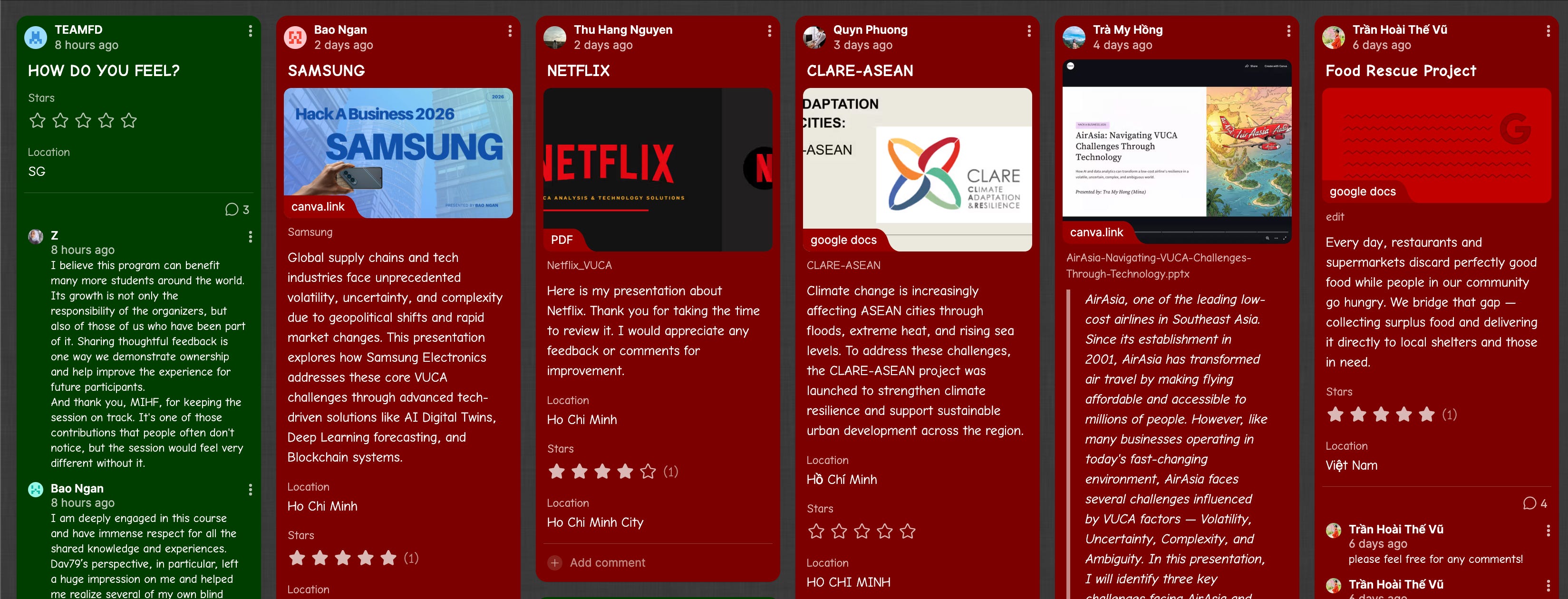
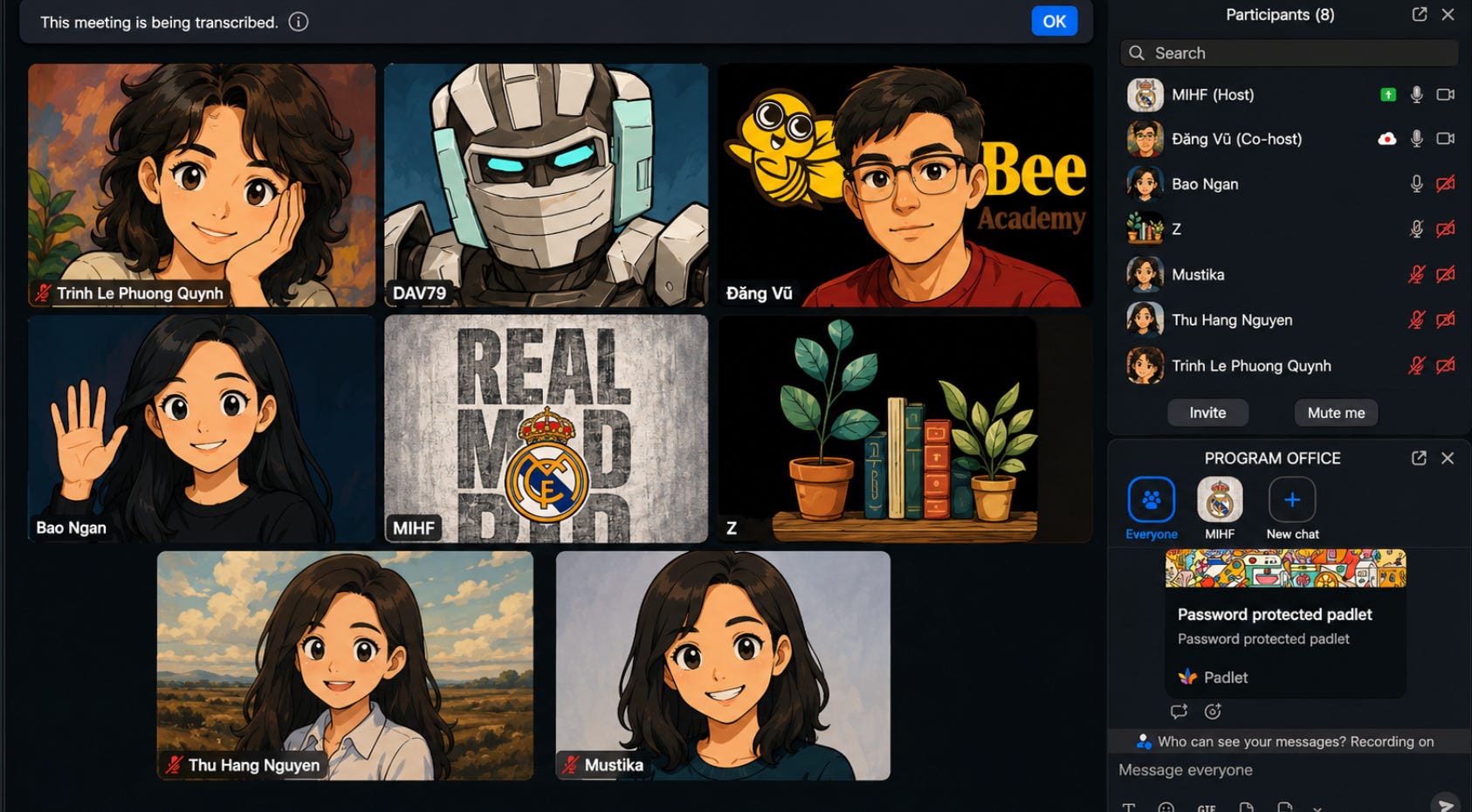
The final day of Hack A Business Season 1 brought together participants, facilitators, mentors, and reviewers from Vietnam, Singapore, Malaysia, and Indonesia, including members from Surabaya, for what was intended to be a showcase of learning after several weeks of exploration into business, systems thinking, and the VUCA environment. Hosted by MIHF under Project ∞, the session was not simply a presentation competition. It was a test of whether participants could identify real-world problems, analyse them critically, and propose meaningful solutions.
As members dialed in, MIHF welcomed the group and reflected on how far the programme had come since orientation. Over the previous sessions, participants had explored the foundations of business ecosystems, participated in war-room discussions, examined real organisational challenges, and learned how Volatility, Unknown ( but known in the standard world as uncertainty), Complexity, Ambiguity shape modern organisations. The final assignment required each participant to select either a company or a social initiative, analyse it using the framework, and recommend technology-enabled solutions.
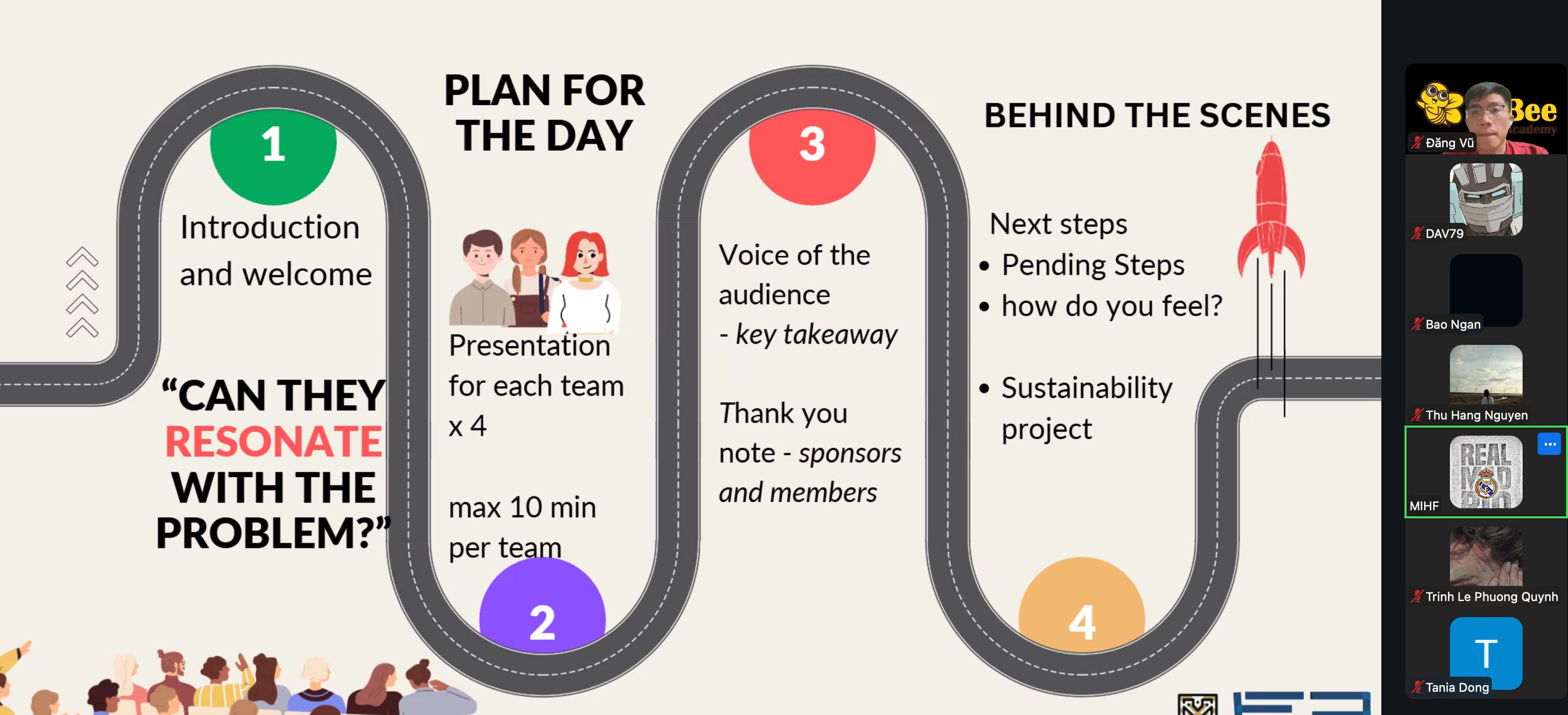
While the presentations differed greatly in topic, a common pattern would soon emerge: participants were increasingly comfortable identifying problems, but many still struggled to explore the deeper causes behind them.
A Regional Audience Comes Together
The session reflected the increasingly international nature of Project ∞. Participants and reviewers joined from multiple countries and cities, bringing different experiences and perspectives to the discussion.
Leading the session was MIHF, who facilitated the flow of presentations and evaluations. DAV79 served as the principal reviewer, frequently challenging participants to go beyond surface-level thinking. Dr Mustika joined from Indonesia to provide additional feedback, while Z contributed observations that repeatedly pushed the discussion toward greater conceptual accuracy.
The atmosphere throughout the session was supportive but demanding. Participants were encouraged to present confidently, but they were also expected to defend their assumptions and explain their reasoning.
Bao Ngan Examines Samsung’s Challenges
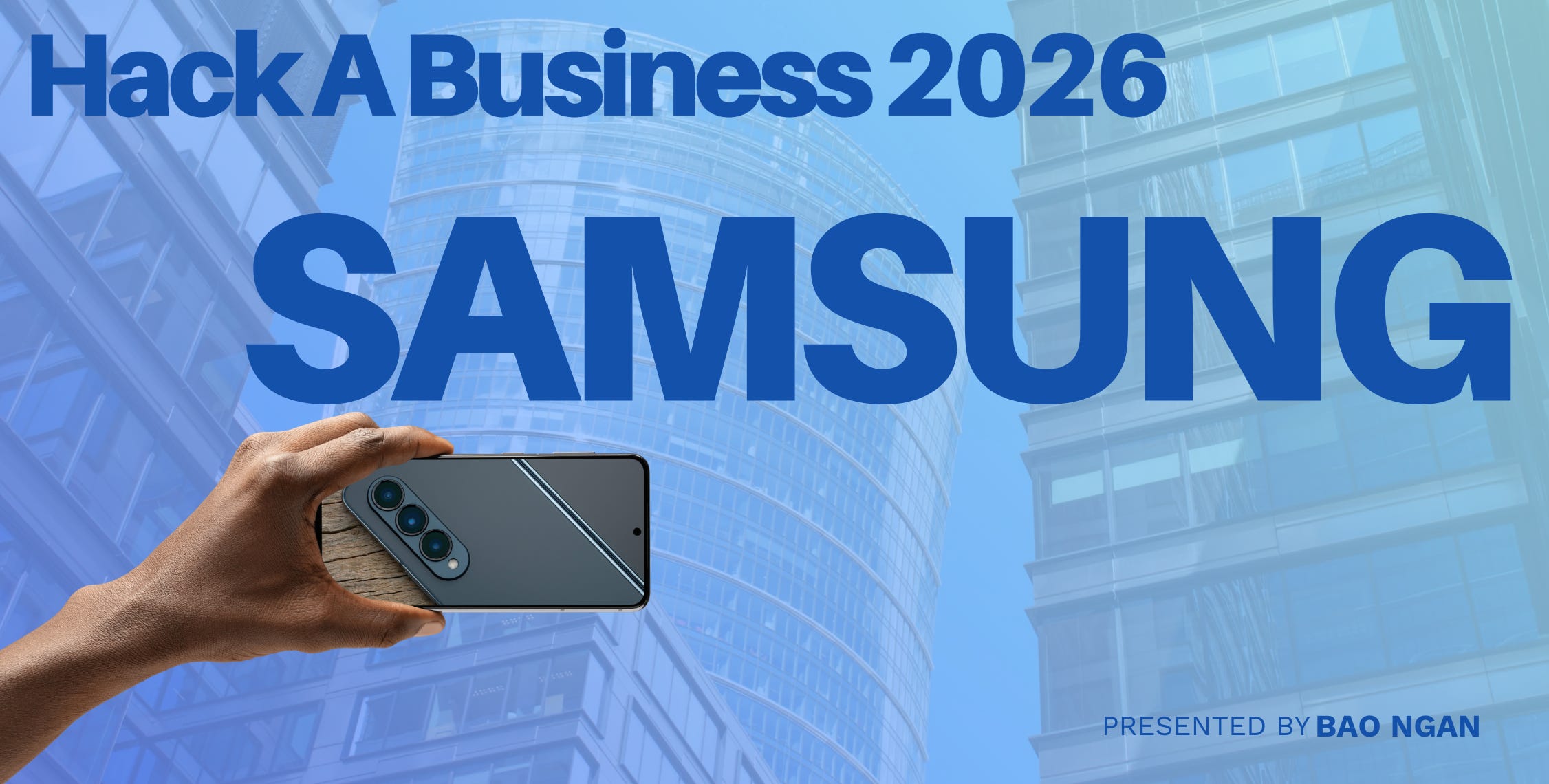
The first presentation was delivered by Bao Ngan, who selected Samsung Electronics as her case study.
Bao began by outlining Samsung’s enormous global footprint. As a leader in semiconductors, consumer electronics, manufacturing, and logistics, Samsung operates one of the most complex ecosystems in the world. Such scale creates significant opportunities, but it also exposes the company to substantial risk.
Bao organised her analysis around three major VUCA challenges.
The first challenge was volatility. She highlighted fluctuations in memory chip pricing and raw material costs, explaining how sudden changes in market conditions could significantly impact profitability. Her proposed solution involved AI-driven forecasting systems capable of predicting supply chain trends and optimising purchasing decisions.
The second challenge focused on uncertainty. Competition from Apple and Chinese manufacturers such as Huawei continues to place pressure on Samsung’s market position. Bao suggested that deep-learning systems and market intelligence platforms could help Samsung anticipate shifts in customer demand and competitor behaviour.
The third challenge centred on complexity. Samsung’s extensive ecosystem of devices and software creates integration risks that can affect user experience. Battery drain, software glitches, and connectivity issues were identified as examples. Bao proposed AI-powered testing environments that could simulate software updates before deployment and reduce failures.
The presentation demonstrated a clear understanding of large-scale operational challenges, but it also triggered an important question from DAV79.
“What is the biggest problem faced by Samsung or any other electronic mobile manufacturers?”
hmmmmmm…….After reflecting for a bit, Bao pointed to user experience issues such as battery performance and connectivity. The exchange highlighted a recurring theme throughout the evening: distinguishing between symptoms and root causes.
Thu Hang Nguyen Takes on Netflix
The second presentation shifted attention to the entertainment industry as Thu Hang Nguyen analysed Netflix.
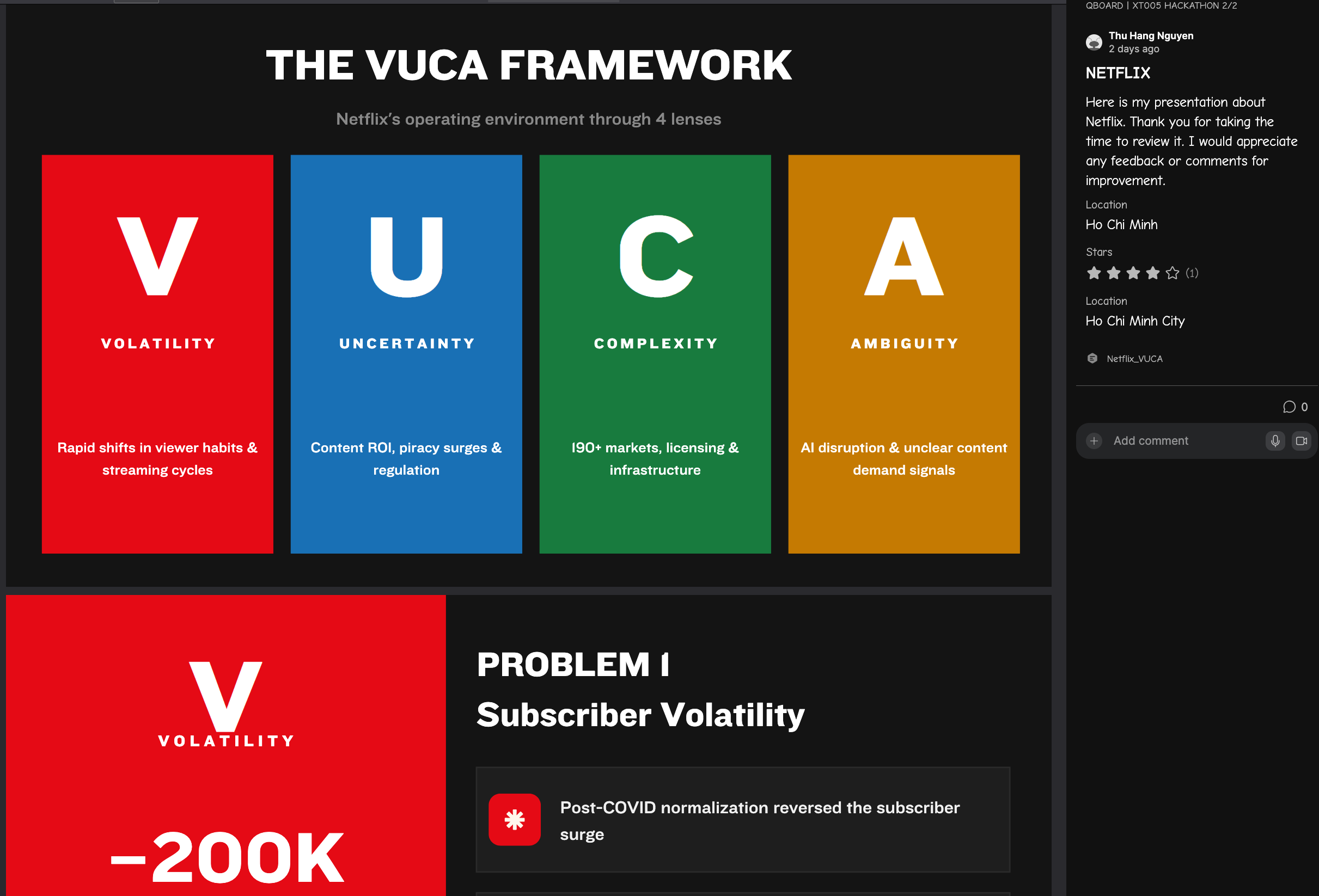
Thu described Netflix’s evolution from a DVD rental service into one of the largest technology-driven entertainment platforms in the world. Operating in more than 190 countries and serving hundreds of millions of users, Netflix faces constant pressure to maintain growth while managing increasingly complex global operations.
Her analysis focused on three areas.
The first was subscriber volatility. Thu referenced periods where changes in subscriber numbers resulted in dramatic market reactions. To address this, she proposed an AI-powered pricing and retention engine capable of monitoring customer behaviour and predicting churn before it occurred.
The second challenge was uncertainty surrounding content investment. Netflix spends billions of dollars annually creating original content, yet predicting success remains extremely difficult. Thu suggested a blockchain-based rights management system that could automate licensing, improve royalty management, and simplify ownership tracking across markets.
The third challenge involved complexity and ambiguity. Netflix operates across hundreds of regulatory environments, languages, and cultural contexts. Thu proposed an AI content intelligence system capable of analysing local trends, recommending content strategies, and ensuring regulatory compliance before production begins.
While the presentation was detailed and well-structured, it prompted one of the evening’s most significant conversations.
Z raised an observation that several presenters had used “Uncertainty” instead of “Unknown” when discussing VUCA.
“This is already the second presentation,” Z noted. “I hope there will be a distinctive difference between uncertainty and unknown understood by the participants.”
The comment sparked discussion among the facilitators. MIHF acknowledged that the distinction had been covered during training and suggested that participants may have relied too heavily on commonly available interpretations rather than the programme’s specific framework.
The moment became a reminder that understanding concepts deeply is often more important than producing impressive slides.
Climate Adaptation Becomes the Focus
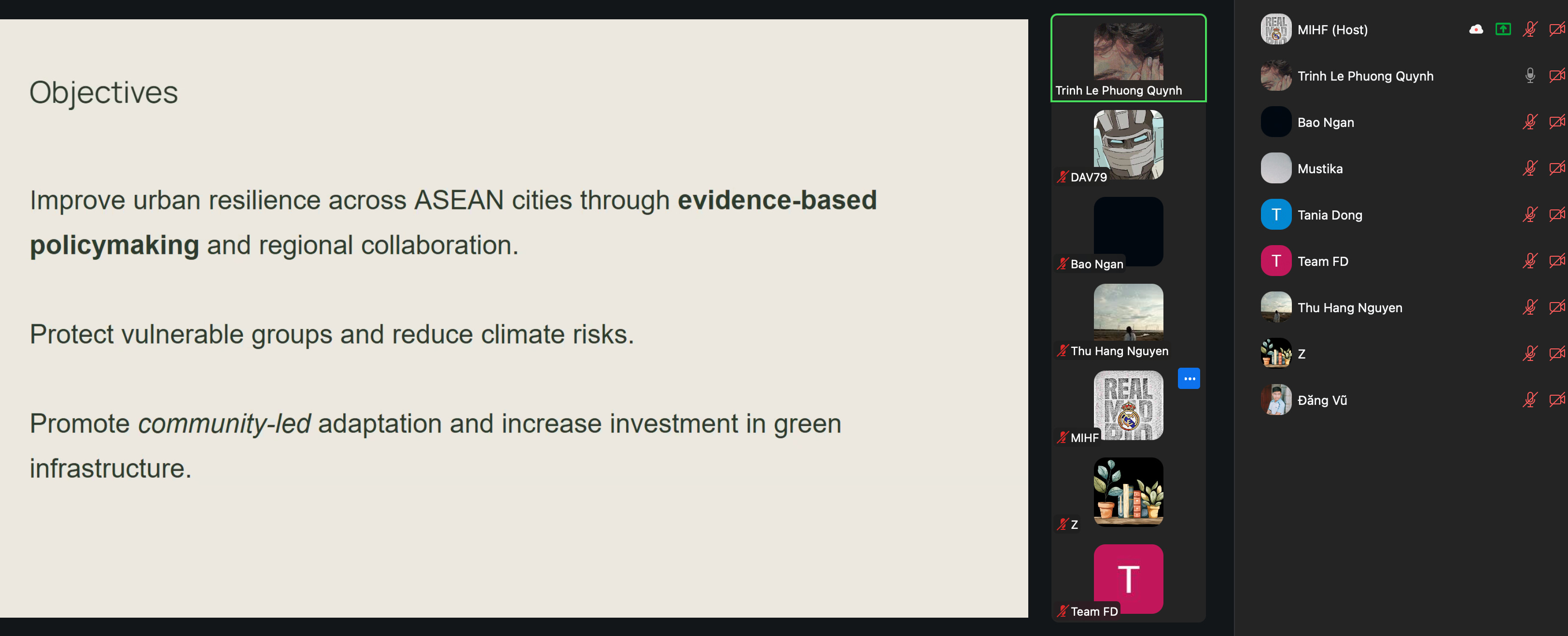
The third presenter, Trinh Le Phuong Quynh, moved away from corporate analysis and instead focused on a social issue affecting millions of people across Asia.
Her project examined climate adaptation in Asian cities through what she called the Climate Asian Project.
Quynh outlined the increasing frequency of flooding, heatwaves, rising sea levels, and extreme weather events across Southeast Asia. She argued that climate change is no longer a future threat but a present-day reality affecting transportation, housing, public health, and economic development.
Applying the VUCA framework, she described climate volatility through changing weather patterns, uncertainty through unpredictable disasters, complexity through interconnected sectors, and ambiguity through the absence of universal solutions.
Several examples illustrated her argument. Ho Chi Minh City continues to face severe flooding during the rainy season. Jakarta is experiencing both rising sea levels and land subsidence. Across Southeast Asia, prolonged heatwaves are placing increasing pressure on communities and infrastructure.
Quynh proposed several responses, including nature-based solutions such as urban parks and wetlands, climate-resilient housing, early warning systems, and stronger community participation.
Unlike the previous business-focused presentations, her project emphasised long-term resilience rather than financial performance. Nevertheless, the presentation reinforced a key lesson from Project ∞: many of the world’s biggest challenges are interconnected systems problems rather than isolated events.
Dang Vu’s Food Rescue Project
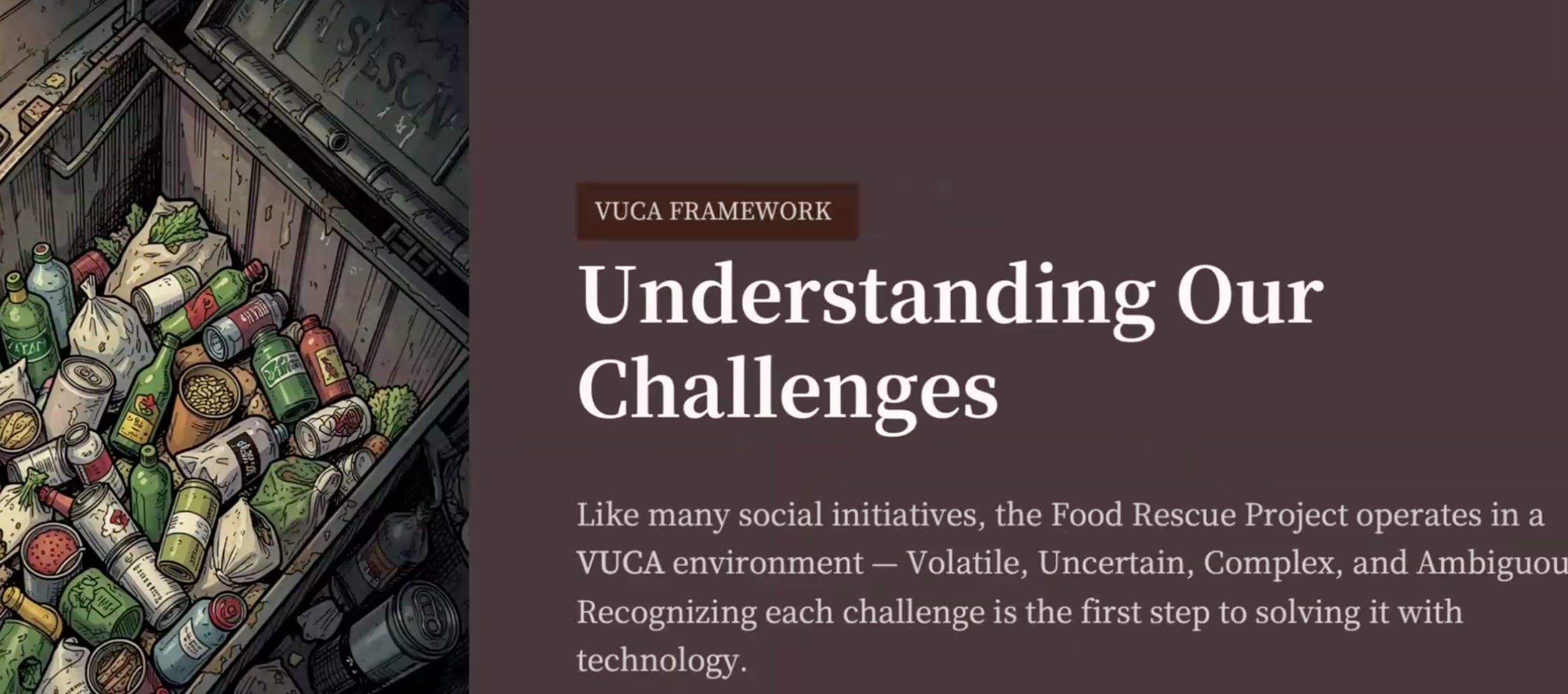
The final presentation came from Dang Vu, who introduced a Food Rescue Project aimed at reducing food waste while supporting vulnerable communities.
Dang observed that restaurants and supermarkets regularly discard usable food while many people continue to experience food insecurity. His project sought to connect those two realities.
The proposed model was straightforward.
Businesses would report surplus food.
Volunteers would collect it.
The food would then be distributed to shelters and people in need.
Dang analysed the project through volatility, uncertainty, and complexity. Mobile applications would connect stakeholders, AI systems would predict periods of surplus food generation, and cloud-based systems would centralise information and coordination.
However, Dang openly admitted that he had not yet developed a clear explanation for ambiguity.
This led DAV79 to revisit a question raised earlier in the programme.
While reducing waste clearly addressed costs, how would the initiative become scalable?
How would it generate revenue?
How would it sustain itself long-term?
Dang requested clarification on the question, noting that these concepts continue to be challenging for many participants. The discussion highlighted the distinction between designing a meaningful social initiative and building a sustainable operational model. It was emphasized that if the goal is to avoid corruption and prevent inefficiencies from creeping into the system, every aspect of the design and implementation must be guided by clear purpose, accountability, and intentional decision-making.
The Review Session Changes the Tone
Following the presentations, MIHF opened the floor to reflections from reviewers and participants.
Z provided one of the strongest observations of the evening.
While praising the quality of the presentations, Z argued that many solutions lacked depth. Participants were often quick to propose technology-driven answers but had not fully explored the underlying causes of the problems they were attempting to solve.
The comment resonated with several reviewers.
Dr Mustika also commended the effort invested by participants but encouraged them to think more critically about economic value and decision-making. She challenged participants to justify why a particular solution had been selected and whether it was truly the most effective option available.
Her feedback pushed the discussion beyond identifying problems and toward evaluating trade-offs.
A solution is not valuable simply because it is technologically advanced.
A solution becomes valuable when it addresses the right problem in the most effective way.
Final Reflections from DAV79
The final reflection came from DAV79.
His assessment was encouraging but direct.
The participants had clearly learned a great deal during the programme. They were more comfortable discussing business challenges, more confident presenting ideas, and more familiar with structured analytical frameworks.
However, there was still significant room for growth.
Several participants had overlooked ambiguity entirely. Others had relied heavily on AI-generated responses without fully understanding the concepts behind them. Many identified symptoms rather than root causes.
DAV79 reminded the group that mastering VUCA is not simply an academic exercise.
Understanding volatility, uncertainty, complexity, ambiguity, and the unknown is increasingly valuable in modern organisations because businesses rarely operate in predictable environments.
The evening closed not with declarations of success, but with a challenge.
Think deeper. Question assumptions. Understand the root cause before proposing the solution.
Participant Reflections: Ownership, Blind Spots, and Deeper Thinking
As the session drew to a close, several participants shared reflections that revealed how their thinking had evolved throughout the programme.
Z focused on ownership and the responsibility of members to contribute to the programme’s future growth. Reflecting on the wider impact of Hack A Business, Z noted that its success should not rest solely on the organisers.
“I believe this program can benefit many more students around the world. Its growth is not only the responsibility of the organizers, but also of those of us who have been part of it. Sharing thoughtful feedback is one way we demonstrate ownership and help improve the experience for future participants.”
Z also acknowledged the work happening behind the scenes and thanked MIHF for facilitating the session and maintaining momentum throughout the evening.
“Thank you, MIHF, for keeping the session on track. It’s one of those contributions that people often don’t notice, but the session would feel very different without it.”
Bao Ngan reflected on the personal impact of the programme and the value of receiving direct feedback from experienced mentors. Having presented her analysis of Samsung earlier in the session, she shared that the discussions helped her identify blind spots in her own thinking.
“I am deeply engaged in this course and have immense respect for all the shared knowledge and experiences. DAV79’s perspective, in particular, left a huge impression on me and helped me realize several of my own blind spots.”
She described the session as both eye-opening and self-reflective, highlighting the role that constructive challenge played in her learning journey.
Thu Hang Nguyen offered one of the most candid reflections of the evening. After presenting her analysis of Netflix, she admitted that much of her initial research process had focused on gathering information and relying on AI-generated support.
“Honestly, I was quite vague when I first started researching and gathering information. I also relied a lot on AI, which I have to admit.”
However, the feedback received during the programme caused her to rethink that approach.
“After this session, I realized that I need to dive deeper into the business itself instead of just collecting information from secondary sources.”
Thu Hang also noted that one of the most valuable outcomes of the programme was exposure to different ways of thinking.
“This session gave me many new perspectives on business and helped me see things from different angles. The people here were incredibly supportive throughout the journey, and I truly appreciate this opportunity and everything I have learned from it.”
For the participants of Hack A Business Season 1, that challenge may prove more valuable than any presentation score they received that night.
Coming Up Next
Hands on Program … individual costs are applicable

Join us as participants or as ambassadors
Season 2 - Sponsored by Team FD

Leave us a message with your email ID if you don’t have access to the video presentations.

It’s meaningful for the final session!